

An individual suspect living in the Guangxi Zhuang Autonomous Region of China was alleged to have operated the world’s largest manga piracy site, BATO.TO (which totaled approximately 60 related sites, including xbato.com, bato.to, and mangapark.io). He was said to have translated Japanese manga and other works into more than 50 languages, including English, and then distributed them illegally without authorization from rights holders.
In May 2025 alone, these 60 sites recorded a combined 350 million visits (See 1 below), making BATO.TO effectively the largest manga piracy site in the world. Total traffic over the 37-month period from October 2022 to October 2025 reached approximately 7.2 billion visits. When applying an estimated access value of 107 yen per manga view (See 2 below), the resulting overall economic impact amounted to approximately 770 billion yen or about US$5 billion. According to the suspect’s statements, additional income from advertising exceeded RMB400,000 (approximately 8 million yen) in peak months.

The site employed geoblocking to prevent access from within China, thereby creating the appearance that no infringement was occurring domestically, while in reality attracting massive global traffic and generating substantial illicit revenue.
Complaint filed in China
On September 25, 2025, the Beijing Office of the Copyright Overseas Distribution Association (CODA), a Japan-based copyright advocacy organization, filed a criminal complaint with the public security bureau of China on behalf of a group of Japanese publishers: KADOKAWA CORPORATION, KODANSHA LTD., SHUEISHA Inc., SHOGAKUKAN Inc., and SQUARE ENIX CO., LTD.
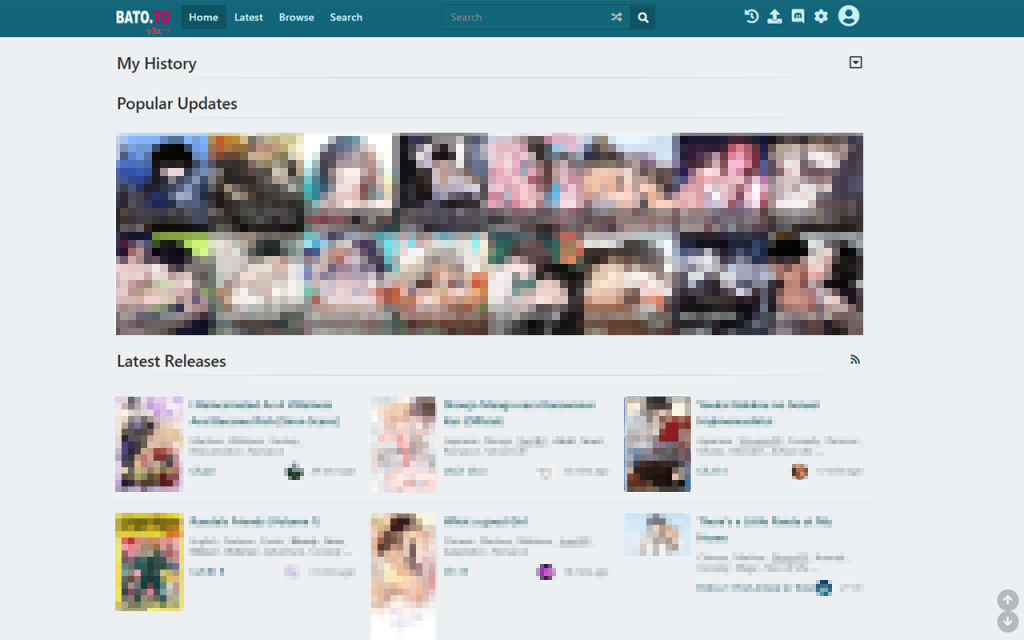
(As of November 2025, with partial image editing). Source: CODA
Upon discovering that Chinese services were being used, CODA worked with a Chinese investigative firm to identify the operator, leading to the filing of a criminal complaint with the China’s public security bureau. CODA has also confirmed that more than 1,000 titles from the rights holders’ works were available for viewing on BATO.TO.
In addition, as part of its international collaboration efforts to strengthen the effectiveness of anti-piracy measures, CODA sought cooperation from China Literature Limited, a subsidiary of Tencent Holdings and one of China’s largest online literature platforms. China Literature confirmed that its comics had been unlawfully distributed on BATO.TO, and filed a criminal complaint in coordination with CODA.
Further details of the piracy operation
CODA found that by operating numerous sites in parallel and dispersing traffic, the operator was able to evade enforcement measures such as crackdowns and site blocking in various countries, allowing large-scale infringement to continue globally over an extended period.
Many of the unauthorized translated manga uploaded to BATO.TO were produced through so-called “scanlation (See 3 below),” in which organized teams known as scanlation groups scan manga, remove the original text, insert translated text, and distribute the works online, causing widespread global infringement. In recent years, as Japanese manga and anime have gained increasing worldwide popularity and AI technologies have advanced, the damage caused by such unauthorized manga translations has intensified, with BATO.TO regarded as one of the major distribution hubs.
CODA also confirmed that a network of individuals involved in operating these sites, including translation and posting of content through social media channels, are located in multiple countries worldwide. CODA will continue its investigations through international cooperation.
Although the group of sites continued limited operation temporarily after the suspect’s detention for evidence preservation purposes, related parties later announced the shutdown of the services on social media. By January 19, the closure of all 60 sites had been confirmed.
Long history
BATO.TO was launched in 2014 as a user-submitted piracy site, and it has been revealed that the suspect played a central role in operating the site since at least 2018. The platform hosted unauthorized uploads of popular manga from Japan, as well as Korea and China, translated into more than 50 languages and distributed globally.
This case originated from concerns raised about BATO.TO at the Five-Publisher Manga Piracy Countermeasures Meeting held in July 2024 (See 4 below). In response, CODA designated the site as a target under its Cross-Border Enforcement Project (CBEP) and initiated countermeasures. Through collaboration with cybersecurity experts, including ethical hackers, CODA conducted open-source intelligence (OSINT) investigations.
In addition, CODA had received a report from NTT Solmare Corporation that daily sales on its e-book store “MangaPlaza,” which targets the U.S. market, approximately doubled immediately following the closure of BATO.TO.
On November 19, 2025, the Shanghai Public Security Bureau of China searched the man’s residence on suspicion of copyright infringement. Authorities seized his personal computers and at the time of this writing, were continuing to investigate server data, the operational structure of the sites, and information regarding individuals involved in their operation.
The individual suspect in the case was detained, questioned, and as subsequently released on bail. He has admitted to operating all of the related sites and is expected to be formally indicted “in due course.”
This case was part of a project commissioned by Japan’s Ministry of Economy, Trade and Industry.
- From SimilarWeb
- Calculated by CODA based on estimates from the FY2025 Content Overseas Expansion Promotion Project (Strengthening Countermeasures Against Intellectual Property Infringement) digital content piracy damage survey
- A combination of “scan” and “translation,” referring to the act of scanning manga, removing original text, and inserting translated text.
- A piracy countermeasures forum comprising KADOKAWA, KODANSHA, SHUEISHA, SHOGAKUKAN and SQUARE ENIX. CODA has participated as an observer since October 2021.
Why it matters
The fact that these coordinated efforts between Japan and China led to criminal enforcement represents a significant achievement in advancing international intellectual property protection.
CODA also views this criminal investigation as a groundbreaking case that will serve as an effective deterrent against scanlation and other unauthorized translated manga sites.
As globalization, digitization, and rapidly advancing AI technologies continue to intensify threats to intellectual property, respecting creative works—born from the ingenuity and tireless efforts of creators—and enjoying them through legitimate channels is essential to supporting cultural development and safeguarding a future rich in creativity.
CODA will continue to actively strengthen cross-border cooperation with relevant organizations and companies to ensure proper protection of Japanese content and promote healthy legitimate distribution.
Further reading
Operator of the world’s largest Manga piracy sites BATO.TO criminally investigated in China. Article. January 29, 2026. CODA (Content Overseas Distribution Association)