

In an interesting twist of positioning, Encyclopedia Britannica (EB) and Merriam-Webster (M-W) say that ChatGPT responses to user requests amount to clickbait that is intended to sell subscriptions to ChatGPT.
As Plaintiffs in a March 2026 Complaint, EB and M-W say that “ChatGPT-based AI products free ride on Plaintiffs’ trusted, high- quality content … by cannibalizing traffic to Defendants’ websites with AI-generated summaries of Plaintiffs’ own content.” This deprives EB and M-W of direct user requests, which they would have the opportunity to monetize themselves.

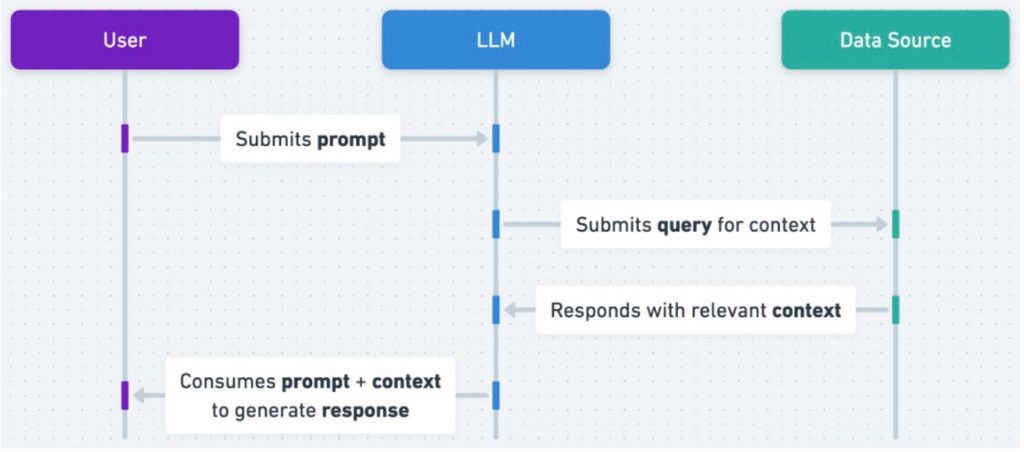
The Plaintiffs reason that infringement happens three times with every user request: First, when OpenAI uses “mass-scale copying” to train its model; second when OpenAI’s platform retrieves and uses EB/M-W content using its retrieval-augmented generation (RAG) model, and third when it generates its output to the user query.
Copyright infringement
The Complaint lists five counts of copyright infringement:
- Copyright Infringement (17 U.S.C. § 106(1)) – Defendants’ Copying of Plaintiffs’ Copyrighted Works as Inputs for LLM Training and RAG Systems
- Copyright Infringement (17 U.S.C. § 106(2)) – Defendants’ Copying of Plaintiffs’ Copyrighted Works to Create Outputs in Response to User Queries
- Vicarious Copyright Infringement
- Contributory Copyright Infringement
- False Designation of Origin and Dilution of Plaintiffs’ Trademarks (15 U.S.C. § 1125)
Brand impact
EB and M-W further contend that OpenAI also may cause damage to their reputation:
“Defendants also violate Plaintiffs’ trademarks under the Lanham Act when ChatGPT generates made-up content or “hallucinations” and falsely attributes them to Plaintiffs (which) misleadingly omits portions of Plaintiffs’ content without disclosing those omissions and displays the incomplete and inaccurate reproductions alongside Plaintiffs’ famous trademarks. In addition, Defendants’ use of Plaintiffs’ trademarks constitutes false designations of origin and confuses and deceives users into believing that the hallucinations and/or undisclosed omissions are associated with, sponsored by, or approved by Plaintiffs.”
The Complaint details several examples, including direct quotes by ChatGPT, using EB/M-W content relating to Alexander Hamilton and his duel with Aaron Burr.
Reuters reported that ChatGPT’s developer OpenAI responded that their models “are trained on publicly available data and grounded in fair use.”
Why it matters
Further in the EB/M-W complaint, “A traditional search engine takes in users’ queries and returns search results that require users to travel to other webpages to explore information responsive to that query. A search result is thus an informational product that connects users to external webpages containing information or content relevant to their queries.
“Put differently, a search engine is an intermediary between users seeking information and web publishers who provide that information. A search engine thus generates clicks from users who click on search results to visit a web publisher’s website. Web publishers like Plaintiffs rely on those clicks to sell subscriptions to users who seek to delve more deeply into some content, as well as selling advertising to third parties who seek to present their products or services before the publishers’ users.”
Further reading
Encyclopedia Britannica sues OpenAI over AI training. Article. March 16, 2026. by Blake Brittain. Reuters.
Encyclopedia Britannica, Inc., and Merriam-Webster, Inc., Plaintiffs, v. OopenAI, Inc (and business units), Defendants, Civil Action No. 1:26-cv-2097. Document 1. Complaint. Filed March 13, 2026. US District Court of the Southern District of New York (hosted by Reuters)