

According to research produced by Alianza and Fabric, online piracy in the fourth quarter of 2025 was approximately the same as for six months earlier. The research segmented consumers into pay TV and online broadband households.
For each of the two segments, losses to piracy were estimated for revenue to operators (pay TV and broadband), programming (direct to consumer delivery), taxes and employment.

Pay TV losses
The total Pay TV market in 22 Latin America and Caribbean countries, consisted of abut 65.4 million users. Of these, about 22.1% were users of Pay TV signal piracy (excluding online piracy), according to Fabric calculations as of Q4 of 2025. Comparatively, in Q2, the number of households was measured to be 69.5 million, about 15 million (22.3%) accessed piracy sources.
The study estimated that pay TV operators lost about $2.4 billion in revenue to piracy. In addition, TV programmers lost about $1.8 billion to pay TV piracy. The additional loss of tax revenue to governments in the region were estimated at about $751 million.
Pay TV piracy was estimated based on illegal connections, retransmission, and underreporting. Underreporting is based on the difference between telephone surveys conducted by the researcher, and subscriber data reported by operators to government regulators.
Employment losses were estimated at about 29,000 jobs across the Latin American / Caribbean region. The number of jobs was estimated based on the estimate that each legal pay TV operator generates about 200 jobs for every 100,000 users.
Online losses
Online households were a different story. Across the same countries, about 46 million consumers (42.6%) out of about 109 million households consume online piracy; about double the rate for pay TV. Online piracy households were segmented into those without pay TV services, and those with pay TV.
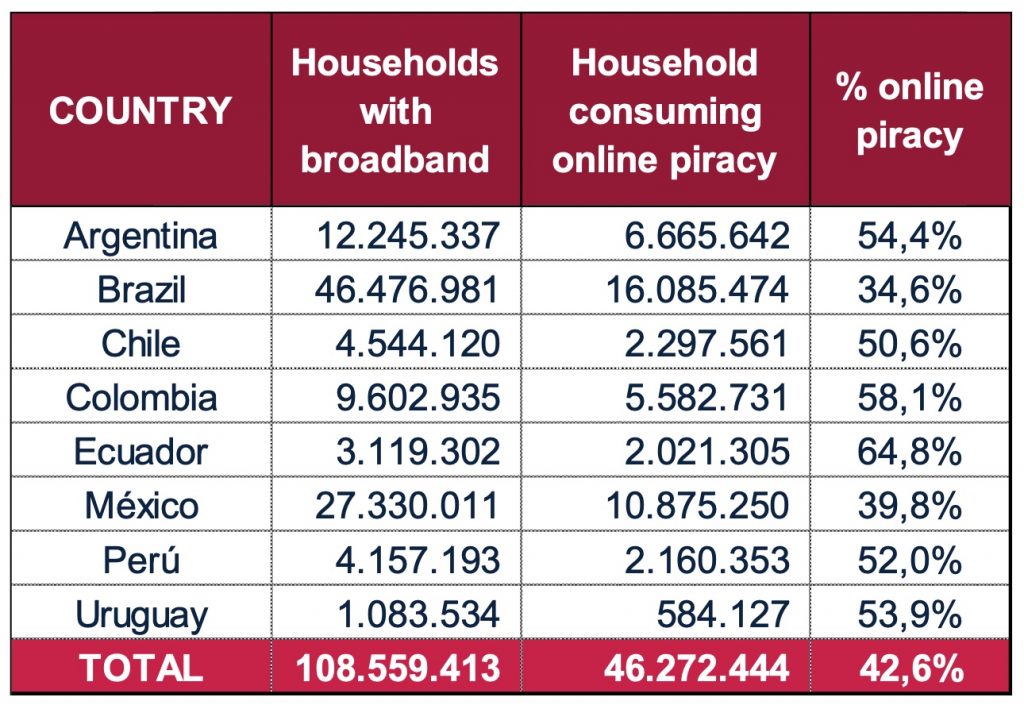
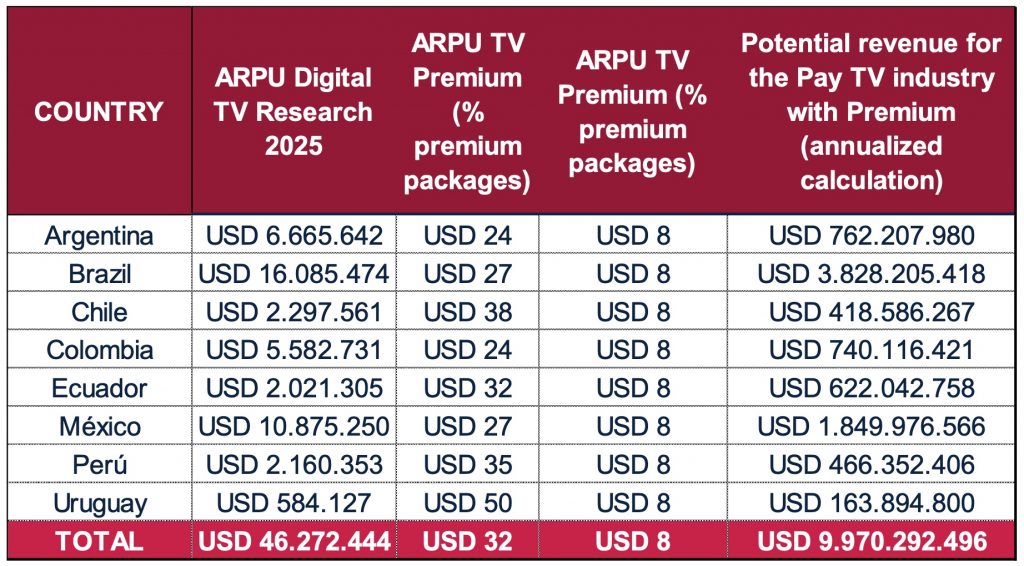
Financially, revenue losses due to online piracy totaled an estimated $9.97 billion. Losses of tax revenue to governments was estimated at about $1.8 billion. Job losses were estimated at 46,272, based on the estimate that each online provider generates about 100 jobs per 100,000 users.
The report recognized a comprehensive list of methods and forms, including streaming, online download, stream ripping, public and private torrents, and social sources.
Additional losses attributed to piracy but not quantified in the report include risks that create additional costs to consumers. These include losses created by malicious software, theft of credentials that leads to personal financial loss, and enticements by fraudulent advertising.
Countries studied
Piracy was studied for Argentina, Bolivia, Brazil, the Caribbean (Aruba, Barbados, Curacao, Trinidad y Tobago), Chile, Colombia, Costa Rica, Ecuador, El Salvador, Guatemala, Honduras, Mexico, Nicaragua, Panama, Peru, Puerto Rico, the Dominican Republic, Uruguay, and Venezuela.
Why it matters
This report provides a well-researched estimate of video piracy in the Latin America / Caribbean region. It uses well-documented and informal estimates of subscriber-rates, ARPU, tax rates and other metrics to estimate losses.
Piracy Monitor considers this to be a good “estimate of record” for the region.
Further reading
Pay Television Network and Online Piracy 4Q-2025. Research report. Published March 2026. Alianza (Alliance Against Audiovisual Piracy)