
The Telegram social platform has emerged as a major channel for large-scale video piracy, where copyrighted content is rapidly distributed among users. Despite its prominence, the structural and operational dynamics of this ecosystem remain insufficiently understood.
To address this gap, a team of researchers published the first large-scale study of video piracy on Telegram in May 2026. They conducted a mixed-method analysis of 1,057 channels that shared 209k unique posts between December 2023 and January 2026—systematically characterizing their content, distribution strategies, and how the ecosystem is sustained at scale.

The researchers estimated financial losses at $17.49B over the study period.
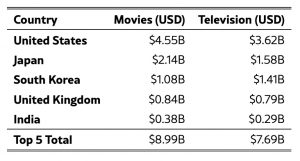
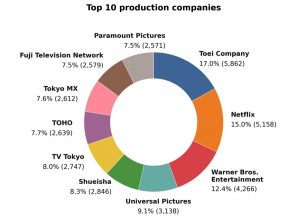
They also identified the top ten production companies affected, as analyzed by their study.
Methodologies
Central to their approach was the development of a fine-grained taxonomy that enables a structured understanding of the activity and intent of these channels on a per-post level. The channels collectively distributed 19,033 unique copyrighted titles originating from 175 countries, accumulating over 4.85B unique views and resulting in a lower-bound estimated financial loss of $17.49B for content rights holders.
The researchers also found that this ecosystem is deliberately engineered to be resilient against takedown efforts, frequently redirecting users through chains of intermediary channels and automated bots that collectively handle hosting, access control, monetization, and channel discovery.
The taxonomy and the research methodologies are described in detail, in the report.
Effective detection tool
The scale and persistence of this ecosystem motivated the development of Anti-RIP, a real-time framework for detecting emerging video piracy communities on Telegram. Anti-RIP utilizes the researchers’ taxonomy to generate contextual, interpretable insights that stakeholders confirmed improve the triaging action against reported posts and channels.
Over a 61-day period, the framework facilitated the takedown of 524 previously unknown piracy channels and 71 bots. To support reproducibility and future research, we open-source both the dataset and the Anti-RIP framework.
Given the substantial financial and intellectual harm caused by large-scale piracy on Telegram, the researchers released both the Anti-RIP framework and the associated dataset at https://github.com/Scalable-Security-Research-Lab/BingeBotRepeat, to support further research and enable practical intervention efforts.
Why it matters
The researchers began with the premise that anti-piracy enforcement efforts have driven the evolution of more robust piracy ecosystems that offer greater resilience, scalability, and accessibility.
With over 1 billion monthly active users, Telegram has emerged as a frontrunner in this shift. However, the researchers came to believe that the structural and operational dynamics of video piracy ecosystems on Telegram remained largely unexplored.
In particular, it was unclear how such channels are structured, how content is distributed across them, and how the underlying infrastructure is sustained over time. Gaining such insight is crucial for enabling effective detection and takedown efforts, and its lack is evident in the largely reactive and ad-hoc responses by security practitioners and stakeholders alike towards such abuse on the platform
Further reading
Binge, Bot, Repeat: Unpacking the ecosystem of video piracy on Telegram. Research study. Released May 19, 2026. by