

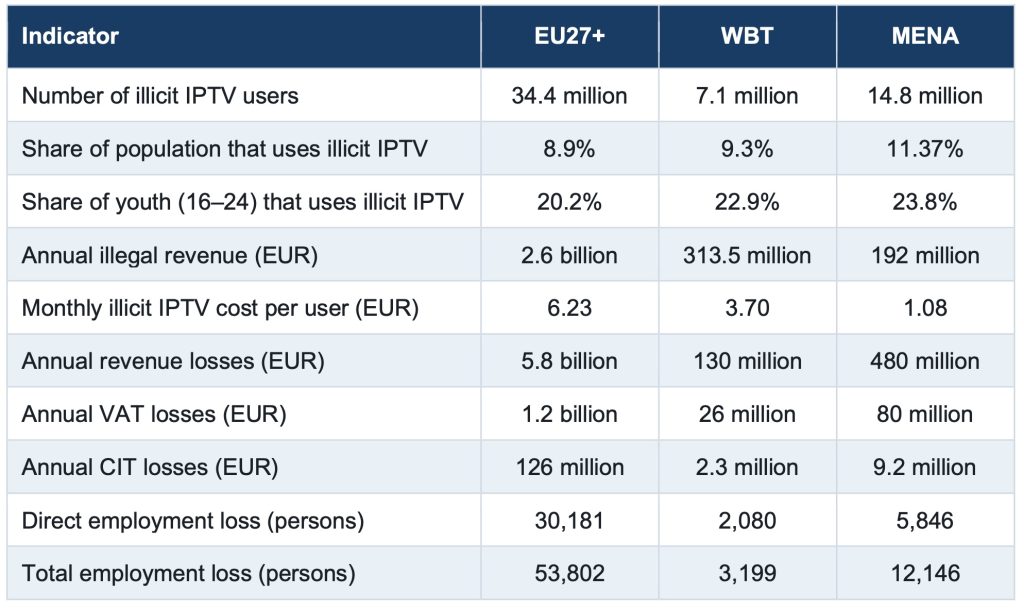
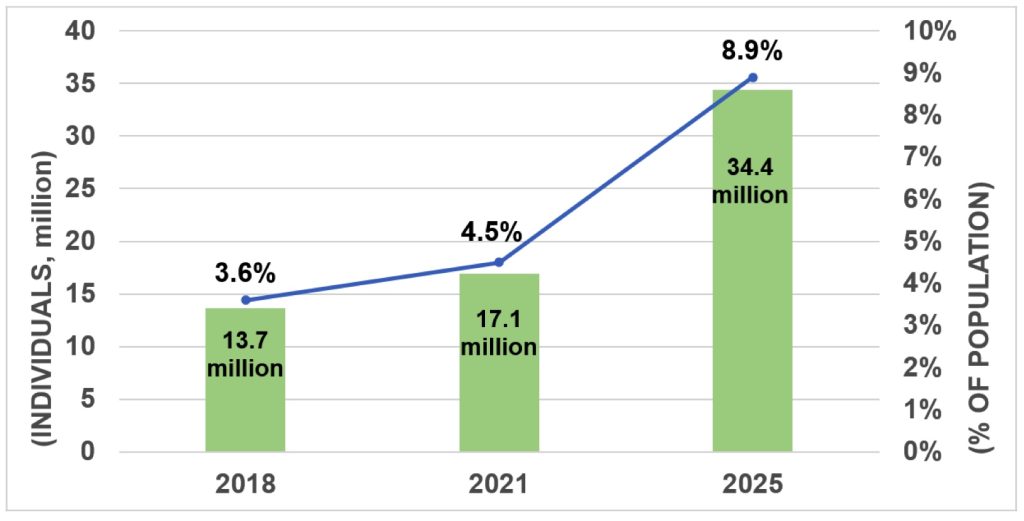
Across the EU27+ countries (The European Union, the United Kingdom, Switzerland and some adjacent media markets), an estimated 34.4 million people accessed illicit IPTV in 2025, generating €2.6 billion in annual revenue for illegal providers. Potential annual revenue losses to legitimate pay-TV providers are estimated at €5.8 billion. These figures represent resources that could otherwise support content creation, jobs and economic growth.
The finding that approximately one in five young people aged 16–24 uses these services raises further concerns about the future sustainability of the market.

Written by Dr. Antanina Garanasvili, Economist, Gobelin House SLU, the AAPA report examined the scale and economic consequences of that activity across 38 economies across three regions:
- European Union Member States, together with the UK and Switzerland (EU27+);
- Five Western Balkan economies – Albania, Bosnia and Herzegovina, Montenegro, North Macedonia and Serbia – and Türkiye (WBT);
- Three North African economies – Algeria, Egypt and Morocco (MENA).
Key estimates are provided at both country and regional levels
Users of illegal online IPTV streaming services approximately doubled between 2021 and 2025, according to AAPA
What is IPTV?
IPTV (Internet Protocol Television) is the delivery of television content over Internet Protocol networks (ITU, 2020). IPTV service includes internet streamed TV (live or catch-up). It can be coupled with an on-demand streaming (VoD), and other types of AV content such as music or even video games
IPTV technology offers the ability to stream the source media continuously, unlike downloaded media. It also enables the distribution of audiovisual content through the internet, instead of traditional methods, such as satellite or cable (Eurojust, 2022).
In the context of this report, “Illicit IPTV” refers to the distribution of television content without the copyright owner’s permission.
Report methodology
The calculation of unauthorized IPTV use draws, among other things, on data about internet TV usage and the use of illegal online sources. For Switzerland, the study uses data from the Federal Statistical Office. As no specific Swiss piracy rate is available, the EU27 average from EUIPO data is used.
Why it matters
Estimates in the report do not extend to illicit video services that do not resemble pay TV or carry content that is not carried on legitimate pay TV services. In other words, the overall ‘video piracy’ problem is greater.
AAPA positions piracy as a copyright problem that sits within a wider cybercrime infrastructure. Addressing it requires sustained cooperation between rights holders, intermediaries, policymakers and law enforcement.
This study contributes an economic evidence base to that collective effort, while recognizing that the wider consequences for creative opportunity, cultural diversity and sporting development cannot be fully captured in financial estimates.
Further reading
Illicit IPTV in Europe and North Africa – Economic Report October 2026. Landing page with link to report. October 20, 2026. Audiovisual Anti-Piracy Alliance (AAPA)