
On November 20, the Judicial Court of Paris granted the LFP Group the right to block pirate services that are illegally retransmitting Ligue 1 and Ligue 2 football matches in realtime. It’s an official go-ahead for the League to deploy anti-piracy technology provided for by a sports law passed by France in August 2026.
The court decision was the result of a procedure initiated by the LFP Group against Internet service providers to obtain the right to block pirate services in real time, marks a new step. The automated system necessary for its implementation is expected to be deployed in the coming weeks, under the control of Arcom, in order to allow Internet service providers to implement the ordered blockages without delay.

The objective of the site blocking system is to minimize the delay between the identification of a pirate service and its blocking, in order to prevent its access at the very moment when the damage is most important, during the broadcast of meetings.
This new mechanism will complement the blockages already obtained for the entire 2026/2027 season. It will allow the LFP Group to significantly increase the speed and effectiveness of its action against piracy and to strengthen the protection of its competitions, its broadcasters and professional football revenues.
First application of 2026 anti-piracy laws
This is the first application of a trio of laws in August 2026 which allow for automated piracy detection, seizure of piracy platforms and criminal penalties for piracy. They are part of an umbrella law, L. 2026-725, on the organization, management and financing of professional sports.
Article L. 333-12 calls for the establishment of an automated realtime piracy reporting system, similar in concept to Italy’s Piracy Shield. It applies to Web sites, IP addresses alternate DNS resolvers, VPNs, CDNs and reverse proxies. It also allows for de-listing of pirate sources by search engines.
Article L. 333-13 makes operating or providing an unlawful live sports streaming service punishable by fines of up to €300,000 fines and up to three years in prison; which increase for offenses committed by organized groups. It also allows for fines of up to a year in prison and €15,000 for promoting or advertising an illegal service.
Article L. 333-14 enables courts to order the removal of software, apps, and devices designed to facilitate illegal sports streaming from commercial distribution channels. These include illicit streaming devices used to receive pirate services.
Why it matters
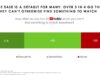
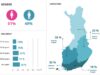
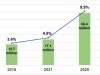
It’s not a moment too soon. According to a study by IPSOS, about 3.5 million access competitions of L1 and L2 club programming illegally, out of an estimated 9.9 million avid football fans in France. It gets worse: 59%, or 2 million, watch championship matches that are distributed legally via Ligue1+ and beIN Sports
Ligue 1 has struggled mightily to meet revenue goals. One analyst (The ESK) estimated that the League would realize less than 20% of its original revenue expectation, due to piracy and to the loss of contracts with multiple distributors. Any effort to restore lost revenue will be welcome.
Further reading
The LFP Group obtains decision from the Paris Judicial Court authorizing real-time blocking of pirated services. Press release. November 2, 2026. Ligue de Football Professional (LFP), France
France: 35% of Ligue 1 football consumers watch illegally. Pirate blocking is on Parliament’s 2026 agenda. Article. March 28, 2026. by Steven Hawley. Piracy Monitor
The Analysis Series: Ligue 1’s last-chance tender. French media rights, club solvency and the risk to European football. Article. November 25, 2026. by Paul Quinn. The ESK