

The complaints discussed in the 2025 Internet Crime Report, produced by the FBI’s Internet Crime Complaint Center (IC3), represent a complete survey of connected criminal enterprise, within which which copyright matters play just a small part. But many of the consequences from consuming illegal media & entertainment services made up a significant portion of cybercrime’s monetary impact overall.
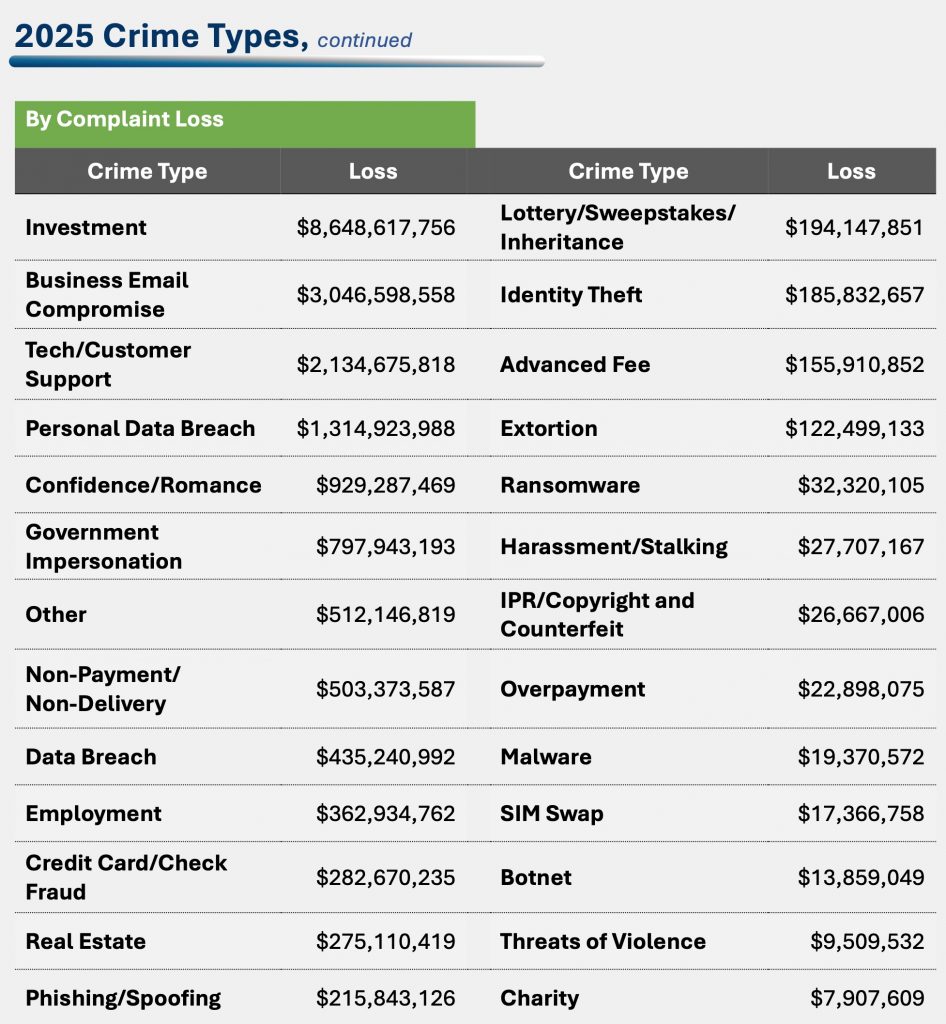
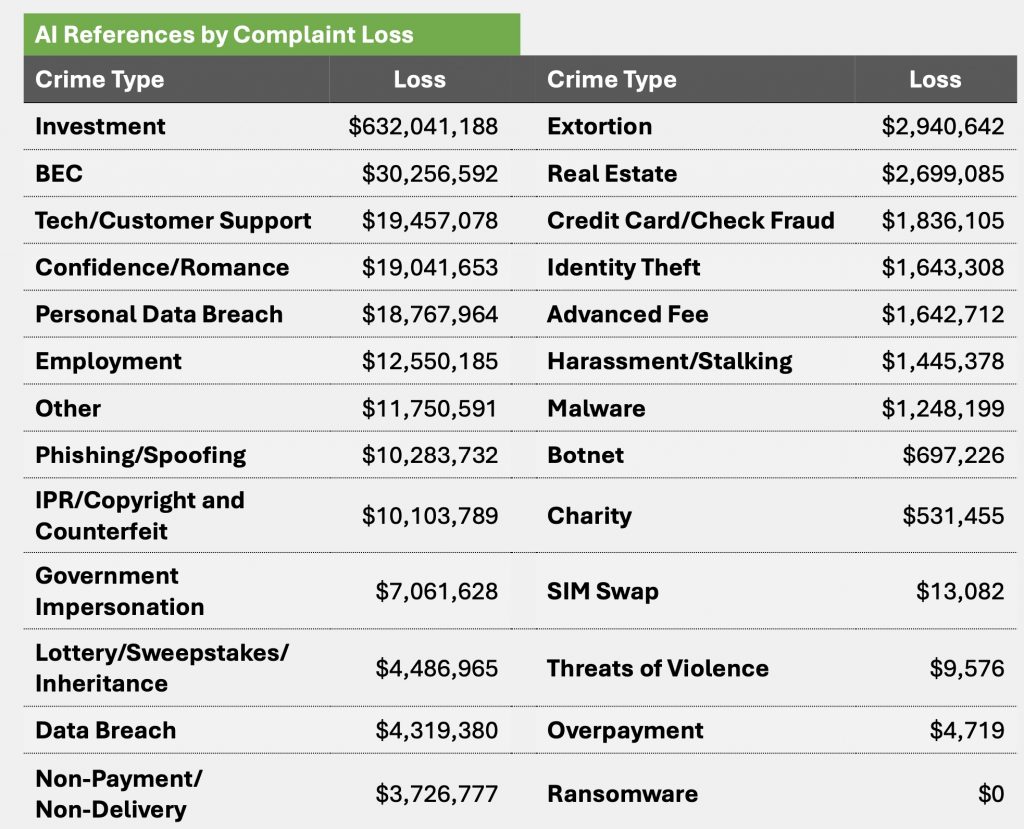
In 2025, losses reported to IC3 surpassed $20 billion. Investment-related fraud was the largest component of these losses, followed by business email compromises and tech support scams. There were more than 22,000 complaints regarding the use of artificial intelligence to commit cybercrimes, amounting to losses of nearly $900 million.

Complaints reported about personal data breaches totaled more than $1.3 billion. Account takeover, for which the FBI tracked about 4,700 complaints of impersonation of financial institution support, was worth about $360 million.
Data breaches and ransomware attacks represented the greatest proportions of reported cyber threats.
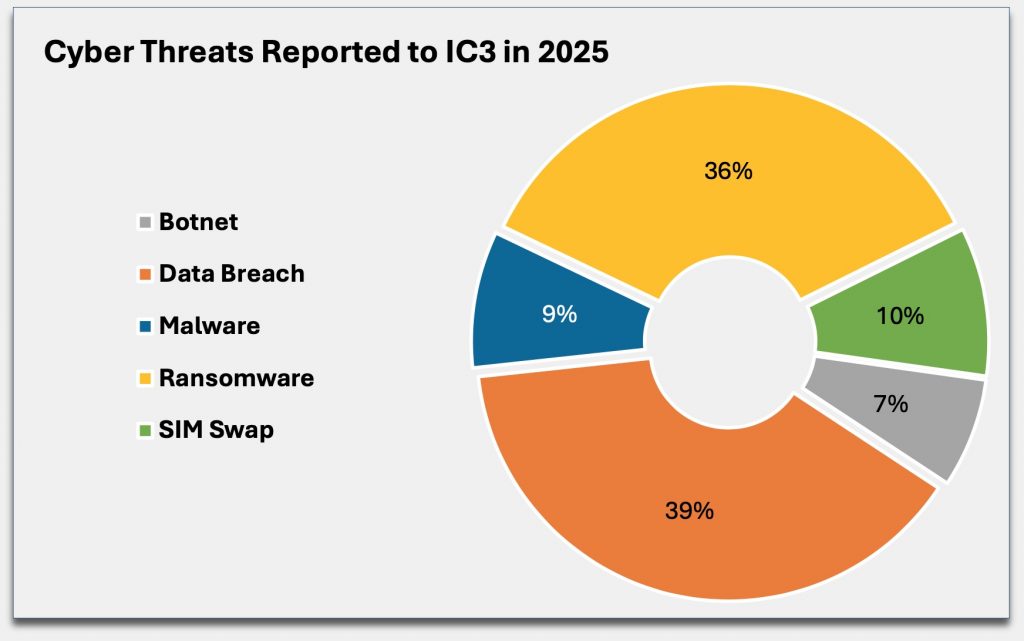
“Hijacked networks, cryptocurrency heists, and corporate espionage are a few examples of the spiraling cyber threat,” said the report. “Every year, our adversaries become savvier and increasingly callous – attacking power grids, shutting down hospitals, and stoking geopolitical tensions. State-sponsored cyber actors wield every element of their national power to target the United States and its critical infrastructure. Skilled cybercriminals exploit new and longstanding vulnerabilities to steal our money and hold our data for ransom.”
The impact of artificial intelligence on cybercrime
IC3 recognized the impact of AI technology and it use in the creation of high-quality synthetic content for social media profiles and personalized conversations. AI-generated synthetic content is becoming increasingly difficult to detect and easier to make, which allows criminal actors to potentially conduct successful fraud schemes against individuals, businesses, and financial institutions.
Investment fraud was by far the most prevalent AI-generated cyberattack. Other AI-related complaints in the report included fraudulent AI-generated IPR/copyright and counterfeiting, business emails with links to wire fraud, confidence scams such as predatory emails from loved ones, employment and investment scams.
Why it matters
The most widely discussed consequences of piracy are all contained in the FBI IC3 report, including copyright infringement, personal data breaches, identity theft, ransomware, malware and extortion.
The most likely reason that the monetary value of IPR/Copyright and counterfeit seems low is that many instances are reported to government agencies other than the FBI. For example, DMCA takedown notices, circomvention of technological copyright protections and concealment of copyright information by pirates are handled by the US Copyright Office and handled directly by online service providers. Furthermore, the US Department of Justice handles criminal prosecution for infringement complaints, and the US National IPR Center manages rights coordination internationally.
“It has never been more important to be diligent with your cybersecurity, social media footprint, and electronic interactions,” said the report in its summary. “Cyber threats and cyber-enabled crime will continue to evolve as the world embraces emerging technologies such as artificial intelligence.”
Further reading
Internet Crime Report 2025. Research report (.pdf). April 2026. Internet Crime Complaint Center. US Federal Bureau of Investigation (FBI)